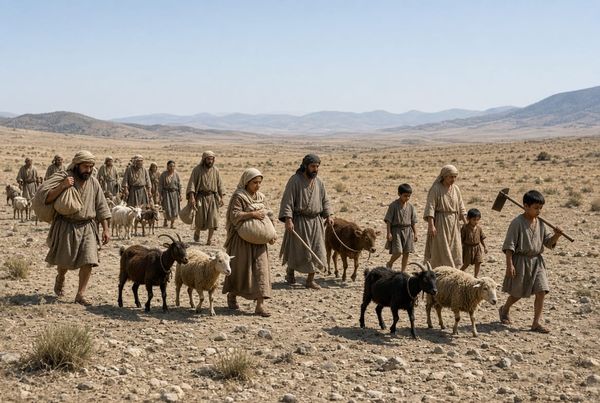
The Cloak at Troas
You already read Scripture by mode. You just do it on instinct, inconsistently — which is why it fails you at the hard verse.
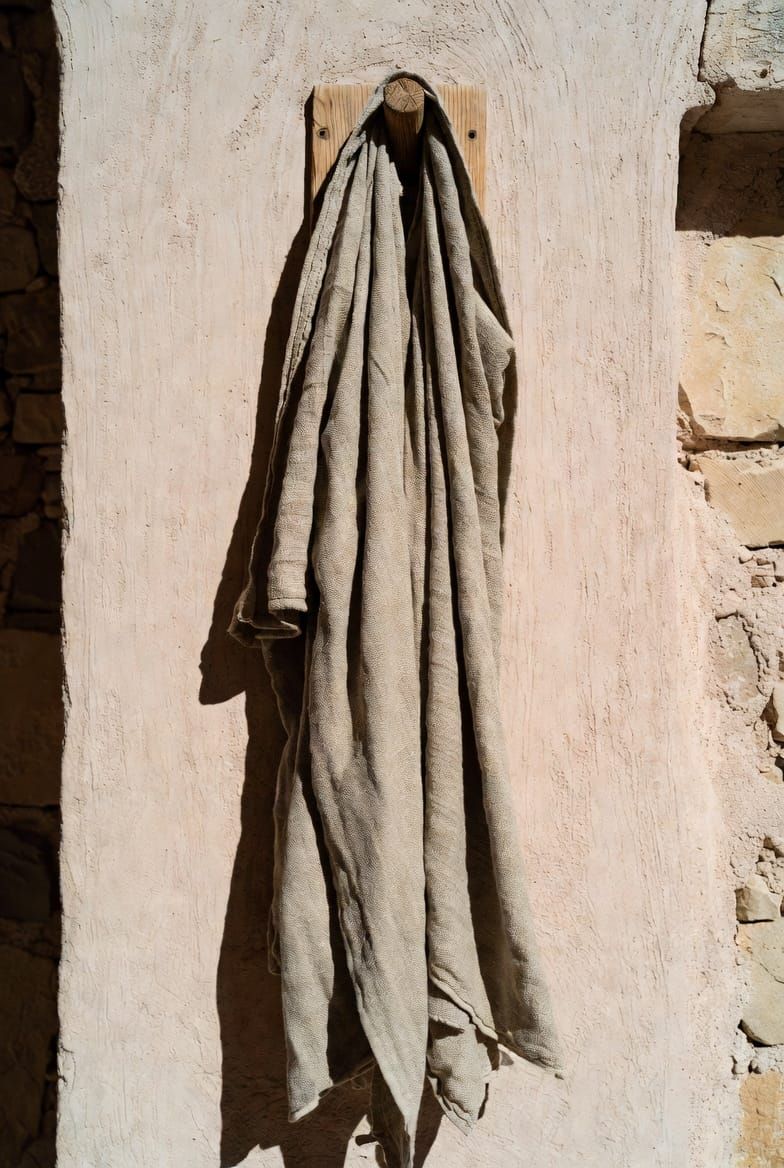
Paul is in prison. He is cold, he is nearly out of time, and he knows it. He writes to Timothy and asks him to come before winter, and to bring three things: the cloak he left behind at Troas with Carpus, the books, and especially the parchments.
Somewhere in Troas there is a coat on a hook, and Paul wants it.
Nobody has ever prayed about the coat. No sermon has been preached on the parchments. No denomination has split over whether Carpus should have sent them on ahead. Every reader who has ever crossed that verse has done the same thing without being told to do it: registered it, understood it as a cold man asking for his coat, and moved on.
That reflex is correct. It is also the entire subject of this piece — because the reflex is real, and it is unexamined, and an unexamined reflex fails you at precisely the moment you need it.
You already read Scripture by mode. You do it constantly. You do not read bring my coat the way you read thou shalt not kill, and you have never once been confused about which is which. But you have probably never been asked to say why, and so the sorting happens below the waterline, on instinct, inconsistently. And that presents a problem for understanding Scripture. It works fine on the coat. It collapses at the hard verse — the one that seems to contradict another verse, the one that has been aimed at you like a weapon, or the one that made someone you know walk away from the whole thing because they think that any apparent inconsistency in Scripture makes the whole thing untrustworthy.
This is an attempt to bring the reflex to read the Scriptures according to how they were written up to the surface where you can use it on purpose.
Two Readers, One Mistake
Picture two people who would never agree on anything.
The first believes every word in the Bible was set down by God, effectively in his own hand, and defends that position at all costs. Hand him two passages that report different numbers, and he will build an elaborate reconciliation. Hand him a verse where the writer says he is giving his own opinion, and the opinion becomes a command from God. He is not lying. He is doing what he was taught: treat every line as first-person divine speech, and never let go of any of it.
The second was raised on exactly the same instruction, and one day found a seam, an inconsistency. Two accounts that would not line up. A number that did not match. And because he had been told that the whole structure rested on every syllable being flawless, the seam was not a seam. It was a demolition charge, planted for him, at the spot he was told to look. He walked away.
Their actions are opposites. But they made the identical mistake.
Both of them assumed the Bible has one mode — that every sentence in it functions the same way, arrives the same way, and carries the same authority. Neither of them got that idea from the Bible. The Bible says the opposite, in the text, out loud, repeatedly.
Reading by mode is not how you find the parts to ignore. It is how you receive the message the way it was actually sent. A letter read as a legal code is misread. A poem read as a statute is misread. An oracle read as one man’s opinion is misread — and one man’s opinion read as an oracle is misread exactly as badly. This is not subtraction from Scripture. It is reception of it. Everything that follows is in service of getting the message, not discounting it.
The Labels Are Already There
Here is the part that should be more famous than it is.
The authors of Scripture tell you which mode they are in. They put labels on their own writing, and the labels are still there, and many ignore them.
In a single chapter of a single letter — 1 Corinthians 7 — Paul changes mode four times and announces each change.
He gives a charge to the married, and marks it: not I, but the Lord. This is not mine. It came from him.
Two verses later he addresses a different situation and marks it the other way: I, not the Lord. This one is mine.
Then he takes up the question of the unmarried and says flatly that he has no command from the Lord on the matter, but that he will give his judgment as a man who has been shown mercy and can be trusted. That is a writer telling you, in the text, that what follows is his thinking on what is best and not a divine directive.
And he closes the chapter by saying that in his judgment, she is happier if she stays as she is — and then adds, remarkably, and I think that I too have the Spirit of God. I think. The man writing Scripture, in the middle of writing Scripture, hedging about his own inspiration.
He does it elsewhere, too. Writing to Corinth a second time, he says outright that what he is about to say in his boasting, he does not say as the Lord would say it, but as a fool.
Luke opens his Gospel the same way — not with a vision, not with a voice, but with a methodology. Many have undertaken to compile an account. He has investigated everything carefully from the beginning. He is writing an orderly account so that Theophilus may have certainty about what had taken place there. That is a researcher describing his research. It is the first thing in the book.
John admits his selection process outright: Jesus did many other signs that are not written here, and these were written so that you may believe. He is telling you that he chose to write. He is telling you why he chose the things that he wrote.
And on the other end of the range, the prophets stamp their oracles: Thus says the LORD. That formula is not decoration. It is a mode marker, and it means: what follows is not mine, it is the LORD’s. The very existence of that stamp implies its absence elsewhere means something. You do not label the exceptions unless the rest is different.
The modes are not a system imposed on the text from outside. They are in the text, marked by the authors, deliberately. Reading the labels is not taking liberties with Scripture.
It is literacy.
The Verse Everyone Arrives Holding
There is one verse standing between most readers and everything above, and it deserves to be met head-on rather than walked around.
Paul writes to Timothy that all Scripture is θεόπνευστος — theopneustos — and profitable for teaching, for reproof, for correction, for training in righteousness.
God-breathed. Everything hangs on what that word does and does not say, so look at it closely.
It is a compound: theos, God, joined to a form of pneō, to breathe or to blow. God-breathed. Not God-dictated. Not God-authored word for word. Breathed.
The word appears exactly once in the entire New Testament. There is no second usage anywhere in the canon to calibrate it against — which means that anyone who assigns it a precise technical definition is importing that precision from somewhere outside the text. The word is not carrying the freight it gets loaded with.
And its root is the same root beneath pneuma — breath, wind, spirit. It is the vocabulary of animation. In Genesis, God breathes into the dust he had formed into a man and the dust lives. Note carefully what happens and what does not. The dust does not stop being dust (Genesis 3:19). It is not replaced, not overwritten, not swapped out for something else. It is dust that is now alive. The breath enters what is there and makes it live. And when the breath leaves, it will be just dust once again.
That is the metaphor Paul reached for. It is not a metaphor for dictation. It is a metaphor against it. It is a metaphor for spiritual inspiration from God.
Then there is the question of what he was talking about. One verse earlier, Paul reminds Timothy that from infancy he has known τὰ ἱερὰ γράμματα — the sacred writings. From infancy. Timothy’s infancy predates the existence of a single New Testament document. There was no Gospel to hand a child. The writings Paul is calling God-breathed are the Hebrew Scriptures. That is not a controversial reading; it is the only one the sentence permits.
Now hold that still and look at what it means.
The body of literature Paul calls God-breathed is the one that contains Eliphaz, whose theology God explicitly rejects. It contains a psalm that pronounces a blessing on the man who dashes infants against the rocks. It contains a book whose author reasons his way to despair from a vantage point he names himself, over and over, as under the sun. It contains two accounts of the same census that report different numbers, and two accounts of the same census that name different instigators.
Paul knew every bit of that. He had it memorized. He called it God-breathed anyway.
Which means, with no way around it: Paul was not using that phrase to mean what it is now used to mean. He cannot have been. He was looking directly at a collection full of recorded human error and divergent numbers when he said it, and he said it without flinching.
The proof text, applied to its actual referent, argues the opposite of what it is drafted to defend.
And look at what the sentence actually claims. God-breathed, and profitable for — teaching, reproof, correction, training. It is a claim about what Scripture is good for. It is not a claim about how the words got onto the page. It is answering a different question than the one it keeps getting asked.
So what is left standing once dictation is struck out? Not nothing — the actual thing. The Spirit moved these men to write. He gave them insight they did not generate on their own and guidance about what to address and why it mattered. They wrote faithfully, in their own words and out of their own lives, under that guidance. What the Spirit supplied was the message and the insight. What He did not supply was the wording. That is not a weaker claim than dictation. It is a stronger one — because it means the truth came through a living mind rather than around one.
One more, from Peter, since it is the other verse in the arsenal. Peter says that no prophecy of Scripture came from someone’s own interpretation, because men were carried along by the Holy Spirit. Carried along, not overwritten, not dictated to. Now notice the scope, because it is right there in the sentence and it is almost never read: he is talking about prophecy. He says so twice. The clearest, most direct, inspiration claim in the New Testament scopes itself to a single mode — prophecy.
The strongest verse they have is doing the thing this essay is arguing for — making distinctions.
Question One: What Kind of Writing Is This?
So here is the first of three questions to run before you read anything. It takes about two seconds.
What kind of writing is this?
Sometimes it is oracle — direct divine speech, stamped as such. Thus says the LORD. The words on Sinai. The commissioning of a prophet. Here the writer is a mouthpiece, and the words are as close to God speaking in the first person as the page can carry. Treat them accordingly.
Sometimes it is history, Spirit-guided: a writer compiling events, selecting what matters, framing them to make a point. Genesis through Kings. Chronicles. Ezra and Nehemiah. Acts. The record is reliable and it is purposeful — the author is choosing what to show you and what to leave out, and what he emphasizes is the message. Ask what he is highlighting, not just what happened.
Sometimes it is personal witness: an eyewitness or a careful researcher giving an account in his own voice, with his own memory and his own emphases. The Gospels. Expect perspective. Expect selection. Expect the ordinary texture of witness testimony, not identical accounts.
Sometimes it is reasoned teaching: an author actively thinking, arguing, applying, pastoring. The letters. Here the Spirit is guiding a mind that is working — and the writer will sometimes tell you when he has crossed from command into judgment, as Paul does. Read the argument as an argument. Watch for his own markers.
Sometimes it is poetry: emotion, imagery, worship, grief, rage, structured in parallel lines. Most of the Psalms. Lamentations. The Song. Poetry is not a lower grade of truth; it is a different instrument, and it tells the truth about the human heart in a way propositions cannot. But it is not legislation, and the man who builds a doctrine on a poem has misread the genre before he ever misread the verse.
Sometimes it is vision: symbols, images, structures beyond ordinary sight, recorded by a man doing his best to describe what he was shown. Daniel. Ezekiel. Zechariah. Revelation. Go for the main message. The reader who demands a precise decoding of every symbolic detail is asking the text for something it never offered.
Sometimes it is wisdom: distilled observation, life under pressure, general principles drawn from watching how the world actually goes. Proverbs. Ecclesiastes. The dialogues of Job. These are principles, not unconditional guarantees, and reading them as doctrinal guarantees is how people end up believing that suffering is always deserved.
And sometimes — this is the category that most leave out, and leaving it out is what makes the rest of them seem dishonest — sometimes it is none of the above.
Sometimes it is just a man writing a letter to tell about something or ask about something.
Bring the coat. Bring the books. Erastus stayed behind at Corinth. Trophimus I left sick at Miletus — Paul, who is recorded healing strangers, does not heal his own friend, and mentions it in one clause on his way to something else. Greet Priscilla and Aquila. Drink a little wine for your stomach. Twenty-six names at the end of Romans.
The Spirit’s role in the coat is none. None is claimed. None is needed. The Spirit did not need to dictate every incidental detail for these letters to be written under His guidance. The same Spirit who gave Paul revelation also guided him in what meaning to include and what to leave out as he wrote to real churches facing real problems.
And that category of Scripture is not an embarrassment to be explained away. It is the evidence. A dictated document does not contain I am cold, please bring my coat. The housekeeping is the fingerprint of a human hand still on the pen. The mundane material authenticates the letter precisely by being mundane — it is what a real man actually writing a real letter to a real friend leaves behind, and no one has ever been able to counterfeit it convincingly.
A taxonomy in which every word is inspired is not a taxonomy. It is a defense brief. This taxonomy has a floor, and the floor is where the coat is.
Question Two: Who Is Talking?
The first question is not enough, and here is the proof.
Take one mode and hold it perfectly still. Wisdom.
Proverbs is wisdom. Job’s dialogues are wisdom. Same mode, same genre, same kind of writing — reflective men reasoning aloud from observation.
And at the end of Job, God speaks to Eliphaz and says that he and his two friends have not spoken of him what is right.
Thirty chapters. Beautifully constructed, deeply religious, quotable, moving. And explicitly, by name, wrong. The text tells you so. It does not leave it ambiguous.
Same mode. Opposite truth-status. Which means the mode cannot be the thing that tells you.
So there is a second question, and it runs on top of the first, in every mode, every time:
Who is talking?
Is this text asserting something, or is it reporting something?
Because the Bible faithfully records things that are false. It records the serpent lying. It records Satan lying. It records Eliphaz. It records a psalmist so hollowed out by exile that he blesses the murder of children. It records a man who reasons from under the sun and arrives, honestly and inevitably, at despair.
A faithful record of a lie is not a lie. It is a faithful record.
And once again — this is the pattern of the whole piece — the text labels it. God grades Job’s friends out loud, in the text, so you cannot miss it. Ecclesiastes repeats under the sun until the phrase is impossible to overlook; the author is flagging his own vantage point on nearly every page. The labels are there. Read them.
Now watch what happens when you skip this question.
A preacher quotes Eliphaz — who that was innocent ever perished? — to a grieving family, as though God said it. He is quoting a man God contradicted by name.
A skeptic quotes Ecclesiastes — the dead know nothing — to prove the Bible contradicts itself about the afterlife. He is quoting a man who told you, in the same book, over and over, that he is reasoning from under the sun and can see no further. This is the earthly perspective, not the whole reality.
Opposite jerseys. Identical error. Both of them read a transcript as a truth claim.
That is the second question, and it runs on top of the first: not just what kind of writing, but whose voice, and whether the text is standing behind what is said. There is one more, and it is the one that keeps the other two honest.
What Is Actually Being Claimed?
So here is the third. Of the thing in front of you, what is the author actually claiming — and what is merely along for the ride?
Every real account carries detail the author is not asserting. A man tells you his house burned down on a Tuesday. The fire is the claim. The Tuesday came along because fires happen on days. The claim is the thing the writer sets his weight on. The incident is everything that arrived with it — because that is how truthful accounts come, with a time, a number, a name, a coat. With details that may be misremembered.
And this cut runs both directions, which is exactly what makes it a line and not a license. You are free to decline to build a doctrine on an incident. You are not free to discard a claim because you would rather it were not there. When Paul marks his counsel as his own judgment, that judgment stands as precisely what he said it was — Spirit-guided apostolic counsel — because he labeled it and you read the label. You do not get to relabel it mere opinion and set it down. The text assigns the weight of each thing. Your task is to carry each at its assigned weight. The urge to lighten the heavy ones is not literacy. It is evasion wearing literacy’s coat.
So the instrument now has three moves, and they run in order. What kind of writing is this. Who is talking. And of what is said, what is claimed and what is incident. Hold that last one. The next passage is where it earns its place.
The Tomb
Now put the instrument on the hardest case in the book, which is also the most important one.
Four accounts of the resurrection. Read them side by side and the peripheral details will not sit still.
How many women, and which? Matthew has two Marys. Mark adds Salome. Luke names Joanna and others besides. John has Mary Magdalene alone at the tomb — and then has her say we do not know where they have laid him, a plural that leaks through and gives away the presence of others he did not bother to name.
What time was it? John says it was still dark. Mark says the sun had risen.
What did they find? Matthew has an earthquake and an angel with an appearance like lightning, sitting on the stone he has just rolled away. Mark has a young man in a white robe, seated inside the tomb. Luke has two men in dazzling clothes who appear beside them. John has Mary see the stone removed and run, before any angel enters the story at all.
And the hard one, the one worth naming flatly rather than tiptoeing past: Mark says the women went out and fled, and said nothing to anyone, because they were afraid. Matthew says they ran with great joy to tell the disciples.
These accounts can be reasonably harmonized. Serious people have done it, and the reconstructions are not absurd — women arriving at different times, angels appearing to different groups, silence on the road giving way to speech at the door. That work is legitimate and it is available to anyone who wants it.
But it is not the point, and it is not needed for the point, and the point survives without it entirely.
Because look at what does not move.
The tomb is empty. The women get there first. The stone is away. He is not there — he is risen. He appears afterward, to people who knew him well enough to know.
Four accounts, scattered across every peripheral detail a witness can get wrong, and the core claim does not shift a millimeter.
Run the tool on it. The headcount of angels is incident. The hour of the morning is incident. The names of the women are incident. The empty tomb and the risen Lord is the claim. Four writers scatter on the incidents and stand as one on the claim — which is not the weakness of the accounts. It is the signature of witnesses.
Then look at what each account kept in — the material any editor with a free hand would have cut.
Luke records that when the women reported it, the apostles regarded the words as nonsense and did not believe them. The text itself tells you the men dismissed the women’s testimony. Peter denied him three times, and it is in the book. They all ran, and it is in the book. Thomas refuses to believe on any terms but his own, and it is in the book.
And Matthew, at the very end, with the risen Christ standing in front of them on the mountain, writes this: they worshiped him, but some doubted.
Some doubted. At the end. On the mountain. Looking straight at him.
A committee assembling an inspirational document does not leave that sentence in. A man who was there, writing down what happened, does.
Now the turn.
Suppose the four accounts agreed on everything — the same number of angels, the same women in the same order, the same hour of the morning, the same words in the same sequence. What would you be holding?
You would not be holding four testimonies. You would be holding one testimony, copied four times. That is not what witness testimony looks like. That is what collusion looks like, and any honest investigator on earth would say so.
The divergence is in the periphery, exactly where memory scatters. The convergence is at the core, exactly where it matters.
The dictation theory has to explain the scatter away. The witness theory predicted it.
What Inerrancy Is Actually For
So here is the claim, made plainly now that the ground under it is laid. Scripture is inerrant — not in the sense that every figure squares with every figure, which it does not and was never built to, but in its message and its coherence. The account of God it delivers does not contradict itself across sixty-six books and centuries of authors who never met and could not have colluded. That is the inerrancy worth holding, and it is the only kind that was ever at stake, because it is the only kind that could have failed.
Which brings this to the thing the whole piece has been walking toward.
Word-level inerrancy — the doctrine that every syllable is flawless divine dictation — cannot fail. That is not a compliment. Any discrepancy at all can be harmonized given sufficient ingenuity: a second census, a different occasion, a variant in transmission, an unnamed additional visitor. There is no possible observation that could ever count against it.
A claim that cannot lose has not won anything. It has simply removed itself from the field.
Coherence can fail. That is what makes it worth something.
If the God who walks in the garden and the God who hangs on the cross had different characters, the whole structure would collapse and no amount of ingenuity could rescue it. If mercy were a late addition and not there in Genesis. If the demand for justice evaporated somewhere between the Testaments. If the God who told Israel to leave the gleanings for the poor turned out to be a different being than the one who fed five thousand — the thing would be finished, and it would deserve to be.
That is a standard with teeth. It could lose.
It doesn’t.
And here is the cost of the other doctrine, the one built out of fear. It did not merely make itself untestable. It took the entire weight of the faith and rested it on the smallest available detail — which is why a single unresolved discrepancy, found by a nineteen-year-old at two in the morning, brings the whole thing down on top of him. He was told that wall was load-bearing — that God, in essence, wrote every word.
It never was.
The message was never in the coat. It was never in the count of the angels, or the hour of the morning, or whether Salome was named. Those things are the texture of real men writing real accounts of real events, and their unevenness is not damage to the message. It is the grain of the wood that the message was carried on.
The Instrument
So: three questions, every time you open it.
What kind of writing is this? Oracle, history, witness, teaching, poetry, vision, wisdom — or a man asking for his coat.
Who is talking? Is the text asserting this, or recording it? Is this God speaking, or a faithful transcript of somebody who was wrong?
What is claimed, and what is incident? Give your weight to what the author gave his weight to. Do not build doctrine on incidental detail, and do not dismiss what he actually asserted just because it is costly.
That is all of it. It fits on a note card and it takes a few seconds, and it will do more to protect your reading of Scripture than any doctrine ever built to defend it.
Nothing here makes Scripture smaller. It makes it legible. The message was never fragile — it was only made to seem fragile by being chained to things it never depended on: a headcount, an hour, a name. Unchain it, and what is left is not less. It is the thing itself, finally readable.
Your job is not to guard every word as though it came down in God’s own handwriting. It didn’t, and the text never claimed it did, and the men who wrote it told you so plainly in the writing.
Your job is to hear the message.
Paul’s coat was on that hook in Troas. And God didn’t tell him to write about that. Go read the letter. Go understand the message.
Explorations — single questions, taken to the text. Developed with Anthropic’s Claude through a Socratic process and edited by D. L. White.
© 2026 Meaning Books. Licensed under CC BY-NC-ND 4.0 — share it freely and unaltered, with attribution.